Private Lessons or Group Training? How to Choose for Your Player
The two formats solve different problems, and most players eventually benefit from both.
October 8, 2026 · 4 min read
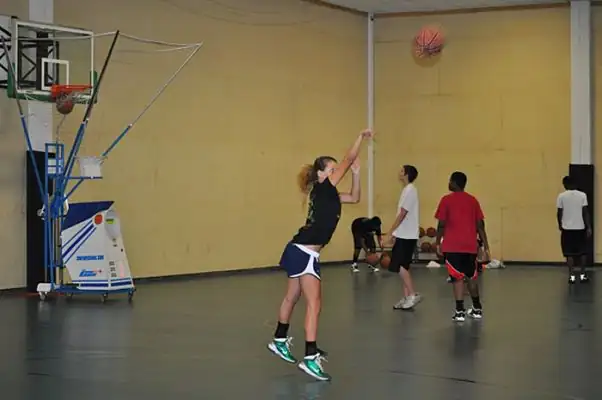
Parents often start with the same question: should my player do one-on-one lessons, or train in a group? The answer depends on what you're trying to fix, and the two formats usually work better as a pair than as a contest. Here's how The Basketball Warehouse Academy describes each one, and how to match them to the player you've got.
What a private lesson is for
The academy describes its individual sessions as customized to each student-athlete's skills, strengths and challenges, and calls them the fastest way to develop and improve, at any level. That last phrase matters. A private lesson isn't a rescue plan for kids who are behind. It's a session built around exactly one player, so every minute goes to what that player needs, with nobody waiting in line for a turn.
Think about what that looks like in practice. In a full team practice, a coach may see your child take a handful of shots in a given drill. In a one-on-one session, the coach sees every rep. He notices the elbow drifting out on the left side, or the follow-through that disappears once your player gets tired, and fixes it on the spot. Repetition without feedback just locks in whatever is already happening. A private lesson puts feedback on every repetition, and that's where the speed comes from.
If your player is just starting out
For beginners, the academy's one-on-one work covers the rules of the game and the basic skills everything else sits on:
- Shooting form
- Rebounding
- Ball handling
- Dribbling
One-on-one time also takes the pressure off. A new player in a big group can feel watched, and plenty of kids who go quiet around a dozen peers will ask a coach all the questions they were holding in when it's just the two of them. Good habits are far easier to build in week one than to undo in year three, so a few private lessons early can pay off for a long time.
If your player already competes
Advanced players can focus on strategic improvement with position-specific drills and lessons, tailored to target weak areas while building on strengths. A point guard who can't go left needs different work than a forward who can't finish through contact, and a team practice rarely has time to treat them differently. A private session does.
The Warehouse also has VertiMax and shooting machines available, which are worth asking about if your player wants extra volume. A shooting machine returns the ball quickly, so a shooter can put up far more attempts in an hour than a rebounding partner would allow.
What group training adds
Group lessons are the other half of the picture. The academy puts it this way: the focus is on the entire group, but there is a lot to learn from practicing with others, plus an added element of teamwork and competition. Group training is open to players of all ages, and the coaches group peers of similar skill level and grade so everyone gets the most out of it.
Here's what a private lesson can't give your player: a defender who is actually guarding them, a teammate who is counting on them to be in the right spot, and the quiet push of someone next to them working just as hard. Skills that look sharp in a one-on-one session get tested at game speed in a group.
A simple way to decide
If you want a rule of thumb, start with the problem you're trying to solve:
- Brand new to the game, or shy in groups: start with private lessons to build confidence and form, then add a group.
- On a team already with one clear weakness: book private work aimed at that weakness, then use group sessions to test it under pressure.
- Loves to compete and needs more reps against peers: group training is the natural fit.
- Wants to play in college: plan on both, and treat them as one program.
None of these is a permanent label. A player who starts in private lessons often grows into group work, and a group player often finds one thing worth a private hour. If you're unsure, say so when you call.
For the college-bound player
The academy encourages private and group training for any student-athlete who wants to improve, and says both are essential for the college-bound player's personal and game development, mindset, teamwork, competition and goal setting. That list is worth reading closely, because only some of it is about skills.
Goal setting is a good example. Putting real targets on paper, what needs to improve and by when, turns a vague wish to play in college into a plan a teenager can follow. Mindset is similar: the player who handles a bad game and hard feedback is the one programs want to keep.
The rule that applies to both
The academy's training page says it plainly: there are no shortcuts. To be great, you must practice, and not just practice but practice only the right way, every time. A lesson, private or group, isn't magic. It's the right practice with someone watching closely enough to correct it.
That's why the best results come from what happens between sessions. Ten focused minutes on form at home, repeated daily, beats one long session the night before a game.
To talk through which format fits your player, see /individual-group-training or call Coach Allen at (727) 235-4726.
The Basketball Warehouse Academy, (727) 235-4726
Call (727) 235-4726More articles
What a Week of Youth Basketball Day Camp Looks Like
From the first morning to Friday afternoon, here's what to expect and what to put in the bag.
AAU, Developmental or FYBL: Which Path Fits Your Player?
Three team paths, three different commitments, and one question to ask before you pick.